2011-2012 Heating Season Average: $2.74-$2.88 a gallon
Average Winter Total: $2,000-$5,500
Propane is a gas that becomes liquid under moderate pressure. As a heating fuel, propane is stored in a pressurized tank and measured by the gallon. When released into supply lines, the propane vaporizes back into a gas. Propane is the most common type of liquid petroleum gas, which is also called liquefied petroleum gas, LPG, GPL, LP Gas or autogas.
Typical costs:
During the heating season (October to March), the federal Energy Information Administration publishes weekly average propane prices[1] in the United States. In October 2013, the average residential price was $2.37. From October 2012 to March 2013, the average weekly price varied from from $2.195-$2.319, or about $880-$1,050 to fill a 500-gallon tank; between 2005 and 2010, prices averaged $1.73-$2.66 a gallon, or $690-$1,070 to fill a 500-gallon tank. With three to five fill-ups per six-month season, total winter costs could be $2,000-$5,500.
Propane is a byproduct of oil and gas production, and in the past propane prices rose and fell in tandem with the cost of crude oil. However, more than half the propane produced in the United States now comes from liquids brought to the surface by drilling for natural gas in shale rock, so propane prices are currently following the more stable costs of natural gas.
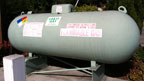
Residential storage tanks are typically 120, 250, 500 or 1,000 gallons, either above-ground or underground. For safety, propane tanks should only be filled to about 80% of total capacity.
Propane is sold by private companies. Some homeowners own their propane tank, while others rent or lease it from the propane company. Homeowners who own their tank can shop around for the best price for each delivery, but will have to pay any increases in the market price; they're also responsible for maintaining the tank.
With a pre-buy or fixed-price arrangement, consumers sign a contract in late summer or early fall for as much propane as they estimate they'll need for the entire winter. A contract can be a good deal if prices rise after the contract is signed; this happens most years because demand is higher in the winter, but prices can be unpredictable.
Additional costs:
Some companies charge separate fees of $5-$100 or more per item for delivery, hazmat safety, administrative costs, setting up payment plans, invoicing, fuel surcharges or other services. For example, in September 2012 Amerigas[2] charged a $9.59 HazMat & Safety compliance fee and $99 for setting up a fixed-price, 12-month payment plan.
With a company-owned propane tank, often the company requires that a certain amount of propane be used each heating season, and may charge a fee (typically $50-$100) if usage drops below the minimum.
Discounts:
Many propane suppliers offer new-customer incentives varying from a specific amount of free propane (typically 50-100 gallons) to a discounted price (roughly 5 50 cents per gallon, although it varies significantly). Be aware of the difference between introductory pricing and the standard rate after the "new customer" period ends.
Some companies offer discounts of 5 cents to 15 cents per gallon if the account is paid promptly (such as within seven days of delivery) or for automatic-fill customers. Companies also offer a bonus (50-100 gallons free or a $50-$75 credit) for referring someone who becomes a leased tank customer.
Work with neighbors to negotiate a group rate for deliveries, or look for an established local fuel cooperative like The Sacandaga Group[3] in New York or Our Town Energy Alliance[4] in New Hampshire. For a moderate annual membership fee (typically $20-$30), these buying groups negotiate a discounted rate; this varies considerably but can be less than the market rate by roughly 10 cents to $1 or more a gallon.
The US Department of Health & Human Services provides information about the Low Income Home Energy Assistance Program (LIHEAP[5] ), helping helps low-income households meet urgent home energy needs. LIHEAP is funded by the federal government but handled by each state[6] , so eligibility rules and assistance varies.
Shopping for propane:
Most companies require that new customers file a credit application before propane is delivered, unless the delivery is paid for with cash, according to the Oklahoma LP Gas Research, Marketing and Safety Commission[7] .
Large, national propane chains include AmeriGas[8] , Ferrell Gas[9] and Suburban Propane[10] .
The National Propane Gas Association provides referrals to propane retailers[11] by zip code.
7 Lesser-Known Discounts for the 50+ Crowd As they age, members of the Baby Boomer generation don't like to admit that they're senior citizens, but they love getting discounts. It's kind of a quandary, because some of the best deals available are reduced prices for older folks. || Posted October 21 2013
7 Ways to Stretch Your Reduced Food Budget End of the year budgets are tight for everyone, especially in this economy.It's especially hard for the millions of Americans who depend on government programs like food stamps to help make ends meet. || Posted November 11 2013
I had a $50.00 weekly auto payment set up for my LP to get ahead and bank up a large sum so I could get on Pre-Pay Plan; which Locks In summer prices, through the winter season until your prepay is used up. No need to worry over payments in winter. No Finance or Service Charges. On-Route. They will fill your tank regularly. I had a $2189.10 credit! I recommend this to everyone. Just think some people spend $50.00 a person each time they go out to eat dinner.
1. If you are on a “locked in rate” you’re getting screwed. Previous owners of the house I bought thought they were getting a better rate until I researched. A $1.50 difference in price. Best is to do “Will Call” and manage it yourself. 2. They send emails with “Special Offers”. But if you check the price as often as I do, you find they raise their price per gallon and then send out the “special offer”. Best to buy in the summer and check and chart the costs. The availability and cost of propane charged to them but the price they were charging me was going up. When I called, they didn’t want to answer and said it was a management decision. Propane industry should be regulated.
For two months December 2020 and January 2021 my bill was 628.00 and the month before that it was over 500.00 dollars Ive never had propane before I bought this house in August 2020 and paid almost 300.00 dollars at closing for the propane l I turn it was down at night to 58 degrees and they are still this high. I have my mother with me and she is 90 and Im scared she'll freeze because I don't run the heater as much now after getting that last bill. I have a house in Philadelphia Pa that uses gas and that bill was 62.00 dollars running constantly every month except in the summer when most months we don't even get a bill. I want to get rid of this propane... I think its crazy how much money they are charging people that Ive started calling around to get prices for Solar and install an electric heater for my hot water and electric house heat, I know I'll go into debt for a while installing it but I am not going to pay these outrageous prices this is sickening!
No contract price is $3.87 x 32.8 gallons + $3.81 fee = delivered remote Cooper Landing Alaska. New contract renewal $1.91/gallon for delivery plus propane cost which I need to check on. Gwins Lodge & Roadhouse Alaska - Online Cabin rentals & restaurant
I have been bitten a couple of times and will not again. Shop around and get the total price including delivery. The best thing you can do is to take a picture of your tank gauge just prior to your delivery in case things do not add up you have proof as to the amount that was in your tank before the delivery. I do pre buy for the winter. I asked them why propane was $1.20 gal in Redmond and $1.65 here where we have hundreds of gas wells and they could not give me an answer. Basically they charge what ever they want.
I own my own tank, just paid $1.499 per gallon from Shaw Creek Propane, best price and customer service around. Located in Edison Ohio. Customer- 8 years.
I purchased a home that was heated by propane,I was not aware but AmeraGas owned the tank and purchased the remaining propane from the previous owner then sent me a bill for the propane in the tank at a much higher rate than what they bought it for.
Price: $2.399/gallon + $7.95 Compliance Fee = $568.60 New company took over about 2 months ago. We were paying $65/year tank rent, will have to see if that goes up now. All this is very expensive. New natural gas line is less than 1 mile away, wish we could connect to that. Maybe some day....
have talked to several propane dealers . looks like thair are no regulations on they operation.The fideral goverment needs to regulate them also. they just charge what they want to.no one understands the buy up front contract. it says no matter what you buy if you dont use it by march you loose it. I think they are all a bunch of crooks. we need to band togeather write the Attorney General for price gouging.Never same price.
To accommodate a new standby generator, added a second 500 gallon tank via Southern States. Filled it & topped off original 500 gallon tank - 441 gallons total. $1.699/gallon
starting off the heating season and need to shop for price...any idea of a website that might do some comparison pricing to assist with where to purchase?
Just topped off my 500 Gallon tank. It was at 50% so 200 Gallons. We heat with wood most of the time and we cook with gas and use it as a back up heat source.
My bill was for 63.5 gallons @ 5.599/gallon which was $355.54. I called to complain because the National Average was $2.33 last month. I live in SC and the average for GA last week was $2.36 and NC was $2.71. For some reason they don't post what it is for SC, but we border GA and NC. The average between them is $2.52. So why is it $5.60 for me? I was told it depended on how much propane I used. The more I use the cheaper it will be. They did end up discounting my cost to $3.69/gal. That's almost $2.00! Why couldn't they just charge that in the first place? I'm grateful for that, but it's still way more than NC and GA.
These folks at Amerigas are a bunch of fools. We were renting a house that used propane and Amerigas bought out the company that we were initially using so we set up an account with Amerigas. We only needed to refill our tank like once in a year (we were real frugal since they charge so much) and then we moved out of the rental house. A year later they send us a $250+ bill. I called to ask what it was and they said that since we haven't ordered any propane from them in a year the charge is for them having had to come out and pick up the propane tank. WTH! 1. We were renters, not home owners. 2. If they need to pick up a tank, they should pay to pick up the tank, not charge the consumer, it's a part of doing business. 3. They should be charging the owner of the property, not the last known renters. We're still trying to get this untangled. I've given the company the property owners name, address and phone, but they continue to send the bill to us when they said they'd fix it.
I had my 500 gallon propane tank refilled this past week and got sticker shock at 277.3 Gal's @ $4.339/Gal = $1,230.93 + fees & Tax =$1,338.46. This is just outrageous!!!!
We have a rental property that had an AmeriGas tank on it that's used for the outdoors (pool/spa and fire pit). We had NO idea how fast the propane would drain until we started renting it out and have been shocked at the cost it's racking up.
3.42/ gal.is this exessive.my parents are on a limited income.with prices like this they won't be able to cook or have hot water. I have been looking everywhere online to get the current price here in California. does anyone know?I guess its cheaper than Tennessee and florida I thought it was comparable to gas prices
Posted by: Disgusted and Appalled in N. Myrtle Beach, SC.
Posted: November 17th, 2016 07:11AM
Company: Amerigas
Above average cost. With regular gas being the lowest it's been in years... Why is propane going up? Why do the have the right to force minimum purchases or you pay higher costs? I am sure the truck makes many deliveries in the area and I am not a special trip.
CostHelper is based in Silicon Valley and provides consumers with unbiased price information about thousands of goods and services. Our writers are experienced journalists who adhere to our strict editorial ethics policy.
CostHelper Community
UTI urgent care visit Paid: 147.00 Visit was $135. Antibiotics was $12. Waiting for four hours in the waiting room and the visit was quick... [more]
Spanish Medical Interpreter Paid: 150.00 I worked with SynShyne Services out of Monroe, NC. They were so worth the price! Professional, friendly, accurate, great attitude and always on time. I recieved an itemized report after every contact and a user friendly invoice weekly... [more]
Skin prick allergy test Paid: 573.00 Took my 9 yr. old in after an allergic reaction to eggs. Several panels for nuts, fish & top 8 allergens. Sure enough, egg came up. Got a script for epinephrine and left... [more]






 Post
Post