Medium: Averages $2,000-$5,000; Runs $4,000-$12,000 in Higher Cost Areas
Enhanced System: $10,000-$20,000+
For homes that aren't connected to a municipal sewer plant, a septic is an on-site system that collects, treats and disposes of household wastewater by slowly filtering it through underground soil. Typically there are two main parts, a septic tank and a soil absorption system (also called a drainfield, leachfield or disposal field). These are located underground and connected to the house by sewage pipes.
Typical costs:
Installing/replacing a conventional septic system[1] (including the tank) averages $2,000-$5,000 in the Midwest, but can be $4,000-$12,000 or more in areas where materials and labor rates are higher.
Enhanced, engineered or alternative septic systems that use mounds[2] , sand/peat filters[3] , aerobic systems and/or constructed wetlands[4] can cost $10,000-$20,000 or more, according to the Rhode Island Regional Water Quality Program[5] .
These alternative septic systems work better than the conventional approach for sites with high groundwater or slowly/rapidly percolating soil, or near drinking water supplies, wetlands, coastal ponds or other water resources.
The cost of a septic tank alone runs about $500-$1,800 depending on size (ranging from 300-1,000 gallons) and type. Piping and other needed items adds another $100-$200 to the total cost of materials.
New Mexico State University provides an introduction to installing a septic tank[6] . However, many regions require a septic system to be designed and installed by trained and licensed professionals; contact your local or state sanitation department for details.
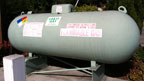
Septic systems are used when sewage treatment plants are not accessible, which usually means rural or suburban homes on large lots. The septic tanks itself is a large, underground, watertight container made of concrete, fiberglass or plastic (polyethylene).
The North Carolina State University Ag Extension explains how septic systems work and where they can be used[7] .
It can take several days to a week or more to install/replace a septic system. The process involves extensive digging, often with heavy earth-moving equipment.
Additional costs:
Most counties and states require a building permit for installing or replacing a septic system, at a cost of $250-$1,000 or more depending on the location and the complexity of the project. Check with your local building/planning department for details.
Installing a septic system usually involves extensive digging and damage to the landscaping; replacement turf and other plantings can run $100-$1,000 or more.
Discounts:
In a cluster septic system, each house has its own underground septic tank but they all feed into one drainfield/leachfield/soil absorption system. Typically installed by developers, a cluster septic system splits the cost of the drainfield installation and maintenance among many houses.
Shopping for a septic system:
Check with your local sanitation department to see if they maintain a list of licensed septic installation contractors.
Referrals to septic contractors[8] are available through the National Onsite Wastewater Recycling Association.
Ask about training and experience. Check that the company is properly bonded, insured and licensed in your state.
7 Lesser-Known Discounts for the 50+ Crowd As they age, members of the Baby Boomer generation don't like to admit that they're senior citizens, but they love getting discounts. It's kind of a quandary, because some of the best deals available are reduced prices for older folks. || Posted October 21 2013
7 Ways to Stretch Your Reduced Food Budget End of the year budgets are tight for everyone, especially in this economy.It's especially hard for the millions of Americans who depend on government programs like food stamps to help make ends meet. || Posted November 11 2013
When flushing my toilet during wet weather, it was gurggling and not flowing out properly. Septic company wants to replace old black pipe with PVC pipe running 80 feet from septic tank to distribution box. They think the 65 year-old black pipe is collapsing. Is $37.50 per foot a reasonable price?
Septic tank needed repair. House did not have a drain fill. Had one collapsed leg that was installed years back. Repair was done to the tank and an entire drain fill with 5 legs was installed. My house is located in a high water table. I hired a reputable plumbing company that offers a three years warranty. Is this a reasonable price to pay for repairing a septic tank and installing a complete drain fill with 5 legs?
I am being told that because of county planning dept regs and not enuf "soil" (4 ft) before bedrock here in the Rockies, it will cost $40,000 to install a septic system for a 2 bedroom home (the smallest unit). Please tell me there is an alternative!
1000 gallon septic tank with 195 feet of quick 4 plus high capacity infiltrator per county code. Inlet line from house to tank plumbing with level 3 soil test and permit. By Easy Clean Septic 678-532-1276 Easycleanseptic.com
1000 gallon septic tank with 195 feet of quick 4 plus high capacity infiltrator per county code. Inlet line from house to tank plumbing with level 3 soil test and permit.
I fought septic tank, leach field problems for years. this is a trailer park, with 35 trailers going into a 7500 gallon tank with 1000 feet in length of leach field. The killer was cooking oil and grease. Plugged up the leach field. Educating the tenants made a huge difference. Then I found the magical cheap combination that worked much better than those expensive enzymes. Equal parts, Yeast, Brown Sugar, and Baking soda. I mix a pound of each and flush it down a toilet every couple of months. My Pumpings have gone from every 6 months to every 3 years, and it is not as bad at 3 years as it used to be at 6 months. Sams club and Costco sell it in bulk cheap.
Posted by: Any Help Appreciated in Charleston, SC.
Posted: May 12th, 2017 08:05AM
Getting ready to purchase a piece of land that requires a septic system in order to build. From soup to nuts, (permits, materials, installation) what should I be looking at for total cost? This house will be built very close to water (Charleston, SC less than .5 miles) How long does the process typically take? Any and all help truly appreciated
A perc or perk test in Northern Va from a licensed consultant will cost between 1200-2500 dollars depending the district and county fees. Fairfax County costs are 2-4x as much due to local health dept bureaucracy and redtape requiring a surveyor and engineer to be used for any certification or permitting. Real costs of conventional systems (3-4 bedrooms) are from 14-25k depending on the soil percolation results and whether or not a pump is required. If the system is an alternative (BAT in MD) the design costs add 1000-2500 in costs and the installation of the specialized equipment adds costs that can total 20-35,000 easily. Some above grade sand or drip systems will cost as much as $45,000 in areas with expectional poor soils. Your property is the most valuable asset you will own so be careful with the land you contract to purchase and beware not all property is equal in value for development.
$5500 was the total cost for everything including permits and inspection certificate, tank, pipes, new leachfield etc. I live rurally in a mountainous region with sloping land so more work was required to remediate the land for the leach field to be level. Took about a week from contract signing to completion.
I had a septic company come to do a septic tank pump for $150 but they said I needed a more expensive leach field treatment at a cost of over $2500 even thought there is no back up or smell anywhere. They wind up doing an enxyme one leaving me with 6 gallons of liquid enzyme I am suppose to pour down the toiled once a month. My son says I was ripped off. Is he right?
Had Pump replaced as well as wire to house, dug up yard, to replace line, replaced pump, didn't take garbage, didn't clean up landscape, pump both tanks included in price , found truck parts in driveway and tanks not pumped, claim truck broke be back to pump....was this a lot , I had to rake out landscape and driveway, clean wires, boxes and garbage left behind, ..I hope they pump the tanks soon.
Repair permit: $130-450 depending on county. New construction permits: $250-550. New septic $16-22k for advanced treatment, $8-10k conventional Perc test for repair: $850-$1,400 takes 2-6 hours. Done with county sanatarian onsite. A common septic repair: (installation of 2 - 60' long x 3' wide x 8' deep with 4' of stone below pipe invert) runs about $6,500.Trench dimensions are determined by number of bedrooms (occupancy) and percolation rates from perc test. price varies depending on Trench size. Bigger means more. Septic tank add $2,500-3,500 Pump chamber, pump and controls add $4,000-5,000. Advanced treatment unit add $10k- $13k to price of permit and trenches. Some states Have programs to help upgrade your septic tank. Check with your county health department. I bid these jobs and this is my basic start point. Specailty jobs, difficulty of access, heavy rock, all add to the bid price
New 1500 Gallon Tank, Engineering, 60' of Leach Field with Rock base drainage system. 50 ton of 3/4" rock, new 4" main line to house, soils testing and permits. Took 3 days total.
75 feet of leach line were dug up and replaced the. attached up to original fifteen hundred gallon 1973 concrete septic tank and re buried .. they had to knock down two fruit trees and by accident sheared off a water tap. (Having not repaired the water line it has now become a 5 foot stream shooting straight up in air.) I do feel grandmother was taken advantage and charged double of not more for services that ... and this is the worst part ... a permit nor independent inspection was never done for this job. And even though these men work for a major plumbing company they insisted on cash only. Is this right? Help me out here what do I do? This was 3 days ago.
CostHelper is based in Silicon Valley and provides consumers with unbiased price information about thousands of goods and services. Our writers are experienced journalists who adhere to our strict editorial ethics policy.
CostHelper Community
UTI urgent care visit Paid: 147.00 Visit was $135. Antibiotics was $12. Waiting for four hours in the waiting room and the visit was quick... [more]
Spanish Medical Interpreter Paid: 150.00 I worked with SynShyne Services out of Monroe, NC. They were so worth the price! Professional, friendly, accurate, great attitude and always on time. I recieved an itemized report after every contact and a user friendly invoice weekly... [more]
Skin prick allergy test Paid: 573.00 Took my 9 yr. old in after an allergic reaction to eggs. Several panels for nuts, fish & top 8 allergens. Sure enough, egg came up. Got a script for epinephrine and left... [more]






 Post
Post