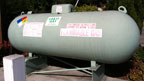
Dumping out a septic tank runs about $75-$200 but can be $300 and up in some parts of the country, and should be done every 1-3 years depending on the size of the tank and the number of people using it, according to Laundry-Alternative.com[1] .
Pumping out larger tanks (1,500-2,500 gallons) can cost $200-$350 or more.
Installing a high-quality filter to protect your leachfield/drainfield costs about $200-$300, according to officials in Olympia, Washington.
Sometimes a failing septic system can be resurrected by properly pumping the tank, cleaning the drainfield lines, installing filters and a process known as fracturing the soil, which involves inserting a hollow tube into the ground and injecting a 300-pound blast of air, at a cost of $1,000-$2,000 or more.
A septic system has two main components, a tank and a soil absorption system (drainfield/leachfield). The tank is designed to let heavy solids settle to the bottom, where bacteria decomposes the solids into sludge. Grease and other light particles float, forming scum. The amount of sludge and scum builds up over time. Pumping prevents them from flowing out of the septic tank and clogging the drainfield/leachfield.
The Maryland Cooperative Extension provides an illustrated explanation of how septic systems work and the Iowa Onsite Wastewater Program explains the need for regular tank pumping.
Note: Biological additives are unlikely to be harmful, but some chemical additives that are advertised as eliminating the need for tank pumping may actually damage the septic system.
Generally pumping out a septic tank takes around 4-5 hours of manual labor or about 2 hours with a backhoe or other equipment, according to Turtlesoft.com[2] . This includes finding the tank, digging out the access port (pumping should be done through the manhole, not the smaller inspection port), pumping out the tank (leaving nothing inside), checking for leaks, and then backfilling and re-grading the site.
Never enter a septic tank; they are extremely unsanitary and may contain deadly gases. Many states require septic tanks to be pumped out only by trained and licensed professionals.
Discounts:
Some companies charge a flat fee for locating the septic tank and digging down to the access port, while others charge for the actual hours worked. Depending on the time involved, you can save some money if you're willing to do the locating and digging yourself.
Tip: While the tank is uncovered, draw a map of its location in relationship to the house or take photos; this can be valuable for future pumping or other septic service.
Shopping for septic tank cleaning:
Check with your local health department to see if they maintain a list of licensed septic cleaning companies.
Ask about training and experience. Check that the company is properly bonded, insured and licensed in your state.
Referrals to septic service retailers and providers[3] are available through the National Onsite Wastewater Recycling Association.
7 Lesser-Known Discounts for the 50+ Crowd As they age, members of the Baby Boomer generation don't like to admit that they're senior citizens, but they love getting discounts. It's kind of a quandary, because some of the best deals available are reduced prices for older folks. || Posted October 21 2013
7 Ways to Stretch Your Reduced Food Budget End of the year budgets are tight for everyone, especially in this economy.It's especially hard for the millions of Americans who depend on government programs like food stamps to help make ends meet. || Posted November 11 2013
TWP requires inspection and pump every two years - two 500 gallon tanks used Klines for the last 3 services they are always on time and priced right good people to deal with
I had the lids uncovered and ready for them. I paid extra do to dirt & gravel that had got in from a broken lid. I still need to get the rest of the gravel & rock removed from the tank before I sell the house. Does anyone have any ideas to do this at a reasonable price?
500 gal tank, we dug down to the access port, had it ready to go, came to 253$. Their fee is for 1000 gal or less, if there’s more than 1000gal you’d have to pay to have them comeback or leave what was left
I wasn’t home when they did it so I do not know about digging anything up or anything. They said it was extremely full (it had been pumped about 2 years prior) and that it needs to be pumped every 2-3 years. Only 2 adults living there and part tine 2 kids
Even with me digging out the access lid (which was a big hassle ) everyone is still well over $350 in this part of the country. I think this website is whacked on the price range it provides..
I called to have the tank pumped after experiencing odors in the house. It had never been done since we moved in 10 years ago. Not sure if previous owners ever had it done. I was quoted a price of $300.00 plus the dumping fee. When Roto Rooter showed up and after he checked the location of the tank he informed me the cost was going to be $553.00. He never explained why the increase in cost. But I needed it done. After he completed the job he informed me the tank was in really good condition and it had been almost full. We should have it emptied every 5-7 years (only 2 of us). Now the tank is empty but i still have the odor in the house! Can't afford to call them out again to check
You need to change your scale that’s from like the 1970s and 80s $75-$200 it cost $100 just to get rid of the septic waste for the company how could a company do it for $75 and do the proper job raise your rates
Had to do inspection and pump out of septic for the sale of house for new Buyes. This is so we could close. Tows Septic is the company we used and they reported that the water line was running across the septic tank underground. Reported after digging that there was a small leak on water line and that they repaired it. Less then a week later water line completely breaks and all water to house lost. No water at all to house to be able to be used. Never had a problem with water or pressure if water to house. Never had a change in an increased water bill.This company caused Kaous for the closing of a sale. They broke the underground main water line when digging to locate septic for inspection and pump out. They left the situation as if everything was fine. Charging a bill of $1000 for the work.We are now in the middle of repairing the broken water pipe and are having company to come back out to repair the damage. Yet to see if they are going to charge us for their mistake.Hope ther ins
We pumped both tanks and leach field over 1000 gallons for $900 water jet the leach field lines for 802 and another 275 for the truck to drain the water from the lines jetting. Not sure if this will solve the problem, but we are trying our best to avoid the cost of replacing it
They did a great job both pumping and jetting. I would recommend them highly and will use them again. Not overpriced like most of the companies. They explained everything plainly. good people.
I just purchased a home and the previous owner had no idea when the septic was last pumped, so it probably had gone 15-20 years without any maintenance. Home inspector said "just get it pumped and serviced so you know what you've got". I called in Delo septic from Holland NY. Over the phone the owner walked me through the process. Since I had no idea where the septic was, he said the first task was to locate it. Delo out two trucks, one pump truck and one water jet / service truck to locate and snake any lines. The two workers located the covers, removed them, pumped out tank, snaked line to house to make sure it was clear (and it needed it). This was expensive, but I learned a lot, and next time it should just be $240 for the pumpout. Very professional company, great to work with.
Idk husband is freakin out said we paid to much.....but we had a bigger tank then we thought we were quoted for a 1500 ($225)and a 2500 ($325)gal tank turned out to be 3000 gal tank.....
Quoted 265. To pump out tank by Hopewell Septic pumping. When job completed said he had to spend extra time to clean out tank and charged me extra 150.00 . Being a nice guy I said ok . When my son heard about the price increase he had a fit, he said the guy took advantage of me because I was an old man. The most I should have paid was for a1250 tank as that is what I had. I should have only paid the price quoted to pump out tank. Was never told it would cost more to clean out the the 4 inches of crud in bottom of tank. Don't use this company.
CostHelper is based in Silicon Valley and provides consumers with unbiased price information about thousands of goods and services. Our writers are experienced journalists who adhere to our strict editorial ethics policy.
CostHelper Community
UTI urgent care visit Paid: 147.00 Visit was $135. Antibiotics was $12. Waiting for four hours in the waiting room and the visit was quick... [more]
Spanish Medical Interpreter Paid: 150.00 I worked with SynShyne Services out of Monroe, NC. They were so worth the price! Professional, friendly, accurate, great attitude and always on time. I recieved an itemized report after every contact and a user friendly invoice weekly... [more]
Skin prick allergy test Paid: 573.00 Took my 9 yr. old in after an allergic reaction to eggs. Several panels for nuts, fish & top 8 allergens. Sure enough, egg came up. Got a script for epinephrine and left... [more]






 Post
Post