Retrofit, Using Gas or Oil Furnace: $1,700-$22,000+
Retrofit, Using Heat Pump: $2,000-$20,000+
New Construction: $10,000-$20,000+
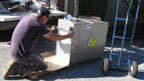
In a central heating system, heat is generated in one location and blown to the rest of the house through ducts. The heat source can be a furnace, a boiler that uses hot water and a coil to warm air or a heat pump (which may be paired with a furnace in colder climates); this heat source is typically located in a basement, garage or utility room.
Typical costs:
In new house construction or as part of an extensive remodeling project where the walls are already torn open, installing a central heating system with either a gas furnace or a heat pump typically costs $10,000-$20,000 or more, depending on the size of the house, the complexity of the system (such as the number registers that release heat or the number of independent heating zones) and the type of unit. High-efficiency gas furnaces usually cost $500-$1,500 more than a standard model.
In a house with existing usable ductwork, replacing a gas furnace with another gas furnace can cost $1,700-$4,000 for basic installation of a standard-efficiency unit or $5,000-$7,000 for a more complex installation in an area with high labor rates; and $2,500-$6,000 for basic installation of a high-efficiency gas furnace or $7,000-$12,000 for a more complex project. If all the ductwork must be replaced or added inside intact walls, it can cost $2,700-$12,000 or more to install gas central heating with a standard-efficiency gas furnace and $3,500-$22,000 or more with a high-efficiency unit.
With existing usable ductwork, replacing an oil-fired furnace typically costs $2,000-$5,000 for a basic installation, but it can be $6,000-$10,000 or more for complex installations. If it's necessary to add or completely replace ductwork, it can cost $3,000-$20,000 or more for a central heating system using an oil-fired furnace.
With existing usable ductwork, a replacement heat pump typically costs $2,000-$5,000 for an air-source heat pump for an average-size home in a moderate climate; $2,500-$5,500 for a dual-fuel air-source heat pump that works with a natural gas or propane furnace under a single control system (for colder climates); or $5,000-$10,000 or more for both an electric heat pump and the fossil-fuel furnace). If ductwork must be added or completely replaced, a central heating system using a heat pump can cost $3,000-$20,000 or more.
It typically takes a day or two to replace the heat source in an existing central heating system, and a week or more to install a new central heating system, depending on the size and layout of the house and the complexity of the system. A replacement project should include removal and proper disposal of the old unit.
Additional costs:
A building/mechanical permit is usually required to replace a furnace. Permit and inspection fees are typically about $50-$300, but can cost more in some locations. Many contractors include getting the proper permits and inspections as part of the installation process, but might bill for these fees separately.
It might be possible to get a low-cost loan, rebate or tax credit for installing an energy-efficient central heating system. The database of State Incentives for Renewables & Energy Efficiency[1] tracks energy-efficiency incentives from utilities and from state, federal and local government agencies. For example, utility companies in Wisconsin[2] pay a $125 "reward" for installing a furnace with a 90% AFUE rating and $275 for a 95% model.
Try to schedule work in the spring or fall, when contractors typically have fewer emergency calls for heating or air conditioning work. It can be easier to get the work done and to get the lowest rates.
Shopping for central heating:
The Environmental Protection Agency lists tips for hiring a heating and cooling contractor[3] .
Referrals are available from the North American Technician Excellence certification program[4] and the Air Conditioning Contractors of America[5] .
Request and check references; ask about length and type of experience; and be sure they are properly bonded, insured and licensed.
7 Lesser-Known Discounts for the 50+ Crowd As they age, members of the Baby Boomer generation don't like to admit that they're senior citizens, but they love getting discounts. It's kind of a quandary, because some of the best deals available are reduced prices for older folks. || Posted October 21 2013
7 Ways to Stretch Your Reduced Food Budget End of the year budgets are tight for everyone, especially in this economy.It's especially hard for the millions of Americans who depend on government programs like food stamps to help make ends meet. || Posted November 11 2013
I just want to know why there are so many stupid people here to pay so much money the cost of heater from trane or carrier for 5 ton 120,000 btu is 680.00 why you paid 7-8 thousand this job should cost 2500 no more
Our hydro heat system was probably fine for a while more but the 19 year old original installation air conditioner (old type coolant) had developed a leak in part that is inside the air handler. Because the hydro was also 19 years old and had sprung a leak before, we decided to replace both. The price noted is for a 13 seer air and 8 whatever e heat rating thing is and included a completely new system except the ducts, and some electrical work to bring it up to current code (new shut off circuit at the system). A 3 man crew plus 2 electricians spent most of the day on the job.
Had ARS install 2 each 2 Ton 15 SEER EEM (Energy Efficient Motor) systems using the existing ductwork. Replacing 10 SEER systems currently in the house. Included a programmable thermostat and qualified for $300 credit from Elect company.
Was provided three bids by AB May. The first is for a Trane system combination gas and heatpump. It was for a 95% furnace and a 16 seer 3 ton heatpump. The unit was also a two stage for further efficiency. This included install, humidifier, ionizing air filter which is reusable, cleaning of the existing ductwork for mold etc, programmable thermostat, and a 10 year parts and labor warranty as long as they come out and check the system twice a year costing $150.00 each year. The system would qualify for a $750.00 discount from the electric company, $225.00 discount from the Gas Company, and $500.00 worth of tax incentives. The price was $12,024 after rebates. The second bid was for an identical system except from their house brand Everest which is a re-badged Goodman system. Still would qualify for the rebates same BTU and Seer rating. This was priced at $8,206 after rebates. They also provided a bid for the most basic Trane system. This included a 95% furnace still, but only a 13 Seer single stage heat pump. The system only qualified for the $225.00 Gas Company discount. This was priced at $6,125 after the rabate.
Heating contractor had quoted an excellent price on a prior Rheem furnace job and showed very good followup, so I did not quote against him when he installed the new Rheem furnace in the main house. Just want to ce=heck the overall price to make sure that he is not getting all he benefits of the 30% tax credit and not me. It's a Rheem RGRM 10, took out old furnace and re built sheet metal to plenum to attach to new one. Installed all. No new ducts, Used existing extra flue. Crew of 2 1/2, worked a little more than 1 1/2 days. How does the going dealer cost for a Rheem 100k but 2-stage 95% compare to cost of labor? Very roughly? Are we close to $5K ??
Goodman GMV95 - 95% eff. variable speed gas furnace in attic, 4-ton 70K BTU. New installation in complete remodel; includes ducts, fans, vents. 2100 sft house after remodel.
Had forced air furnace with .96 efficiency, ducting & 18 Seer/12 eer/4cop heat pump installed with new ducting in connecticut. Works well - ac bill for 1960's wall units was about 30 dollars a day before now hardly registers. Heating costs have declined nearly 80% from 1960's baseboard electric system
Just installed a new forced air heat unit, installed new ducts (where there were none) through out the house, removed old baseboard water heaters and radiators and added an A/C unit in a 2400sq ft 70 yr old house.
CostHelper is based in Silicon Valley and provides consumers with unbiased price information about thousands of goods and services. Our writers are experienced journalists who adhere to our strict editorial ethics policy.
CostHelper Community
UTI urgent care visit Paid: 147.00 Visit was $135. Antibiotics was $12. Waiting for four hours in the waiting room and the visit was quick... [more]
Spanish Medical Interpreter Paid: 150.00 I worked with SynShyne Services out of Monroe, NC. They were so worth the price! Professional, friendly, accurate, great attitude and always on time. I recieved an itemized report after every contact and a user friendly invoice weekly... [more]
Skin prick allergy test Paid: 573.00 Took my 9 yr. old in after an allergic reaction to eggs. Several panels for nuts, fish & top 8 allergens. Sure enough, egg came up. Got a script for epinephrine and left... [more]






 Post
Post